Exercise 1.1 Audit your practice
As I start to audit my practice it is quite easy and evident to determine my direction. Below is the catalogue I used for a recent exhibition which included some new work and some work completed on painting 2. Some of the Painted work I resolved before including.
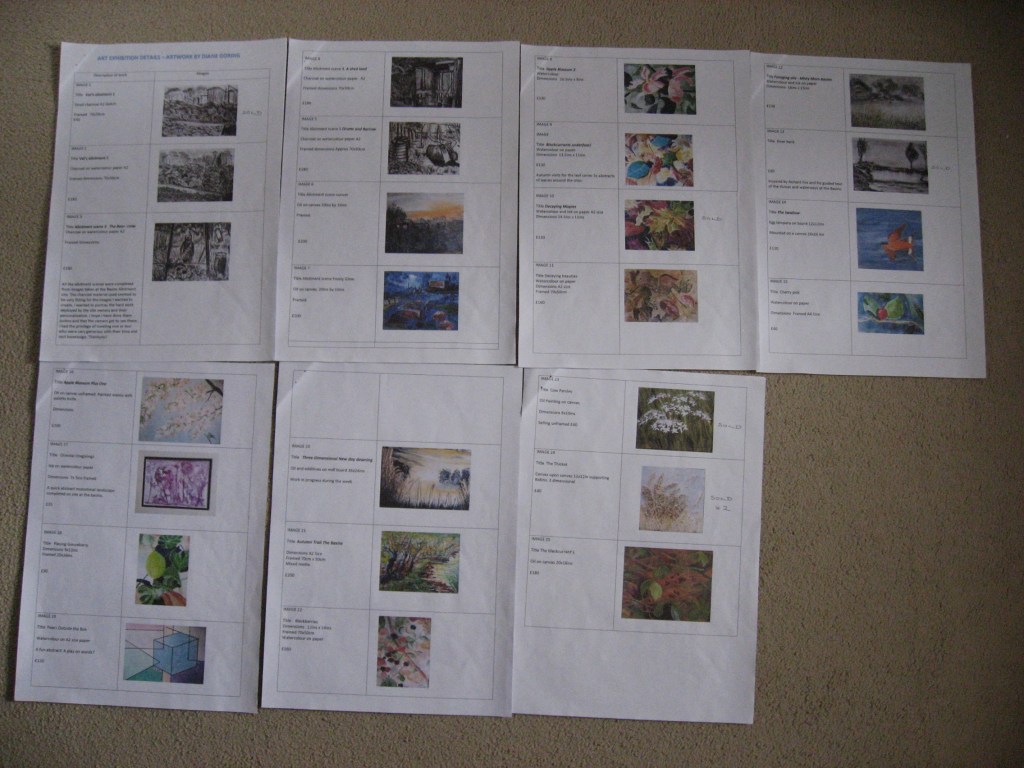
It is important to explain where I am at in my journey. Before completing Drawing 2 I always questioned my ability and at times didn’t feel worthy of being on the course. I chose the Drawing 2 A Personal approach to drawing as I really knew I needed to improve my drawing skills. This could also only help to enhance my painting skills too. As I began the module I couldn’t believe what I was achieving. William Kentridge became my catalyst for improvement and I visited his exhibition at the RA in London. I was also given such positive feedback on some of my drawings from my tutor and this also gave me confidence and spurred me on. Charcoal became a favourite medium and it was about not just drawing but erasing and learning a range of new skills. I include further drawings below.


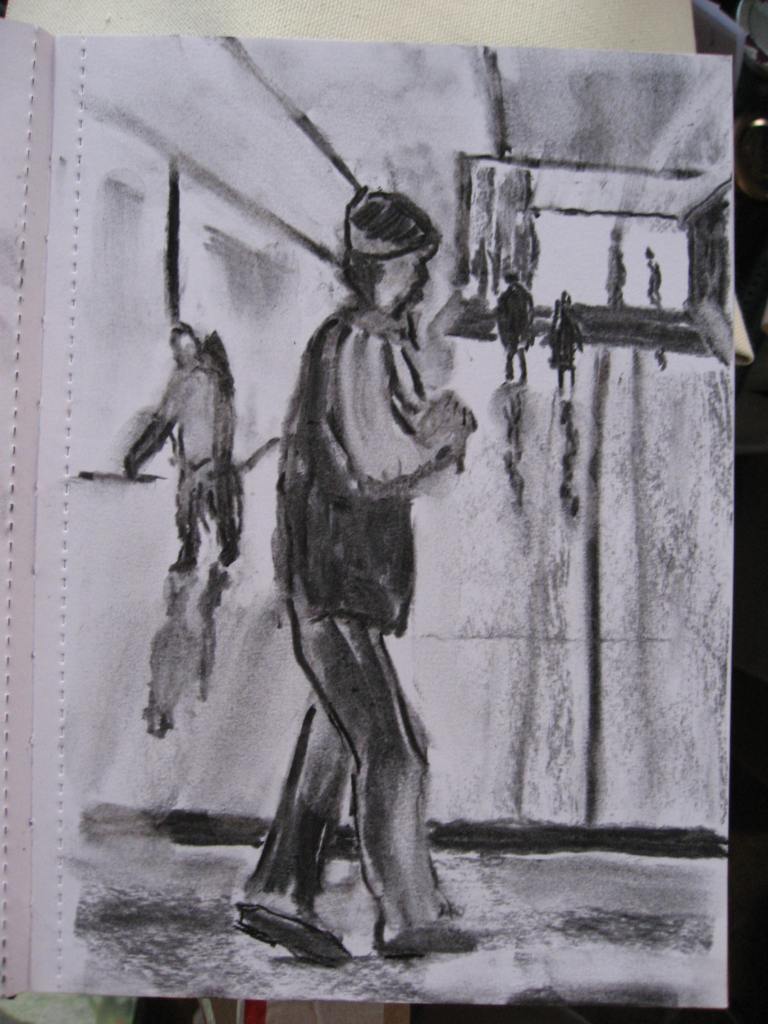
Portraiture and figurative work are really important to me as my art is fundamentally about people. Fairness and injustice might be at the centre of my work. Raising awareness of important difficult social issues or reportage of some things that might be noteworthy of celebration.
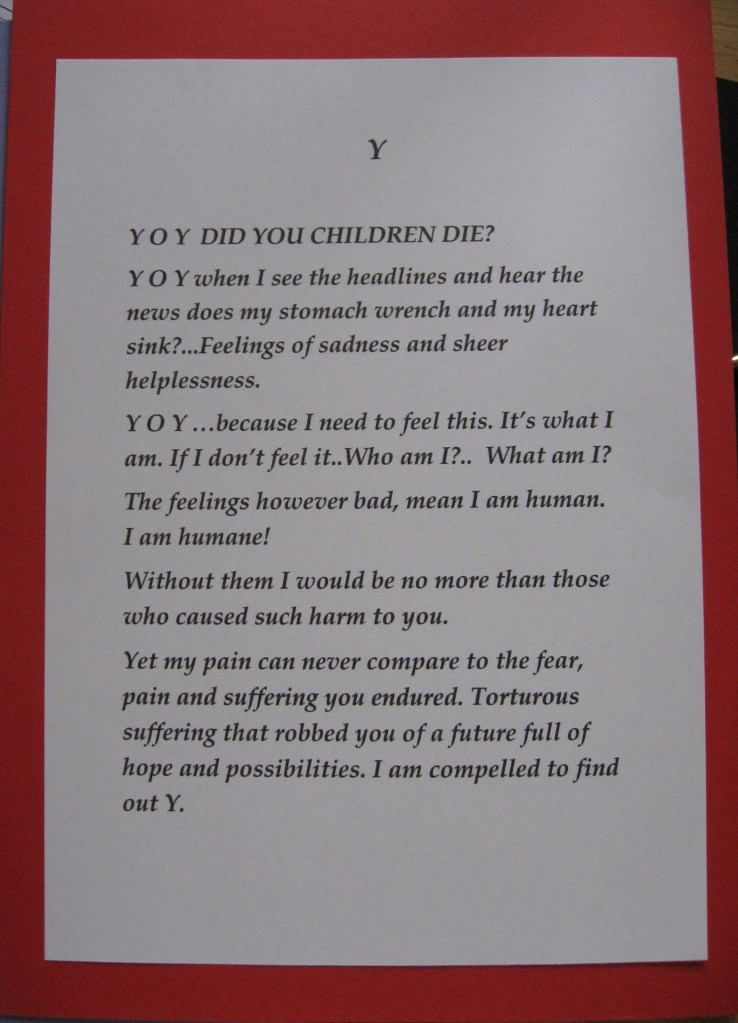
Throughout drawing 2, I was continuing to reflect on my drawing practice and this was in tandem with my social conscience kicking into gear. I completed a text piece which was a letter to dead children. I include a copy below. I’d become incensed when more children were hitting the headlines and being killed by their parents or carers and there was often public care involvement. I feel passionately and I care about a range of issues and looking after vulnerable children well, is high on my list.
I completed the letter in various designs but chose to submit the hand written one as it felt more personal.
Surveying the field
I guess my processes in using the charcoal and my passion for trying to understand why too many children were dying and hitting the headlines were intrinsic to the development of ideas for future work. My social care and health experience as a social worker will help me in my quest as I am already in a position to know where to look for the documents that might provide answers around why children die. My knowledge also lends itself to a range of possibilities around the work being educational, raising awareness, interactive, and might also serve as preventive.
The last sentence raises a lot of questions in regard to how I implement the work and this needs to be managed sensitively. My improved competence in the charcoal drawings will be the medium that I believe will work for me and the dark earthiness of the raw material will suit the dark nature of the work. In some ways the charcoal comes from the earth as the tree that is then burnt or burnished, and there’s a correlation in regard to how the children as dust to dust also return to the earth. The text piece and the enquiries will also inform the future work as I begin to unravel what they convey.
Whilst the main specialism will be the charcoal drawings and maybe paintings there may be elements of experiential exercises that will border on performance. I’m very much a people person and I’ve always cared about people’s feelings and their well being the experiential exercises I see as an extension of the visual language in my drawings. I shall be interacting verbally and directing viewers to experience and appreciate the power imbalance of adult v child and how easy it is to exploit the child’s vulnerability. I anticipate that once I begin there will be a range of visual drawings that will unravel the disturbing events.
In the research section I have made reference to Kentridge and I have researched his work and how he uses charcoal. However his work extends to animation, collage, cinematography, theatre and even puppetry. He researches the social history of apartheid and the historical events and tragic circumstances are then conveyed in his work. He portrays people that have been physically tortured and abused and their deaths in a manner that dramatically engages with the audience. I managed to draw my friend Barbara and capture her feelings of despair. I hope to create and capture some difficult images of what happens to children at the hands of their parents or care givers. The other artist who works in charcoal or conte crayon is Barbara Walker. For her visual images she researches material from books internet searches, the Imperial war museum and eBay where she found old post cards. My research themes will be similar to Kentridge and Walker. I intend to use research photos from the internet and real children for the baby images and then create from these my own visual images in charcoal or graphite.
My biggest fears are not being able to produce good enough drawings. My other huge issues are suitable venue with good footfall for an exhibition and consideration of funding providers and partner agencies. These issues will no doubt unravel as I can proceed further.
The other things I must mention about my practice is about engaging with the audience and teaching and involving them in practical ways to discover the enjoyment in drawing or painting. The workshops I held during my exhibition in June were also very successful and several people were interested in further classes. My confidence grew with the exhibition and another couple of spin offs were that I was asked to undertake a workshop with some older people at a day centre. I also undertook an interactive painting demonstration to an audience of around fifty people at a friendship club. I really didn’t know if I could pull this off but I made it fun interjecting with humour and telling them of my artistic journey. It worked well and one of the participants bought the work. I only charged for materials as it wasn’t all my work! This new found confidence has led to me responding to the open call Trinity Buoy Wharf Drawing Prize Exhibition. It was fraught getting my entries sent off. I sent three charcoal works of the allotment scenes. One was accepted and it was quite an emotional experience to see my name included of the list for the exhibition. I am quite shy by nature but in my work as a social worker I had to be at times very assertive as an advocate for children. In a similar way I guess I’m pushing myself a little on a personal level with my art. Teaching practical skills or running workshops or demonstrations can maybe be included as sustaining my practice.
Research point: Describing reflective practice.
I researched the ideas of Dewey, Schon, Gibbs and Kolb but I have been trying to use the model we were introduced to in a session with Bryan Eccleshaw called An analytic of making and it focussed on the work of Antoine Berman. I have also included this below.
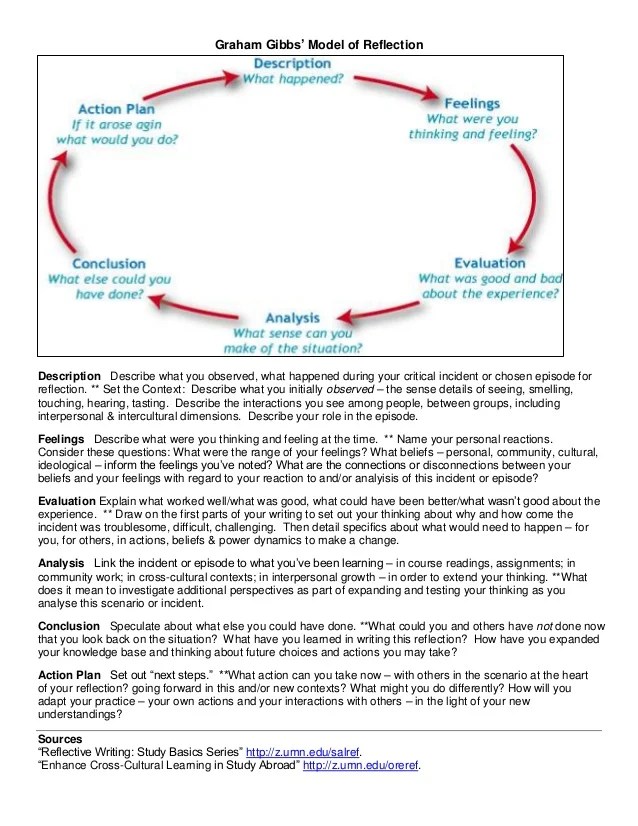
A copy of Gibbs model is below with the descriptors and explanations included below.
I also include Kolb’s model and other information from the website as detailed. The explanations of the cycle are detailed in the four points below. The website is at the end of the text.
“Kolb shows how reflection on an experience leads the individual to form concepts about that experience, and to be able to generalise from one experience to another”Williams et al., Reflective Writing
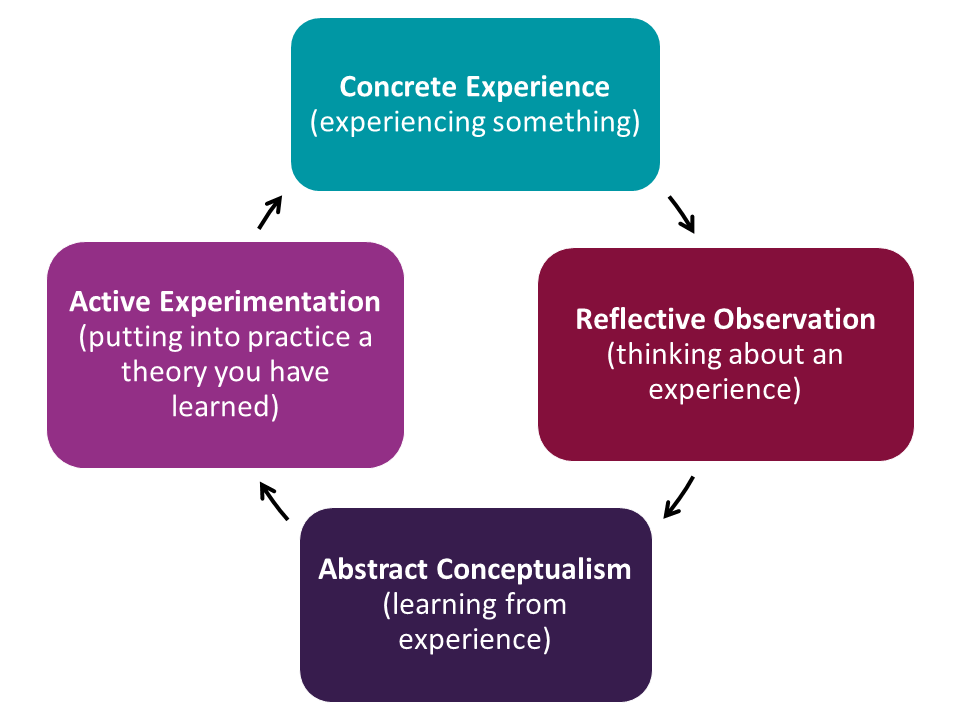
Kolb’s Cycle of Reflective Practice
Kolb’s (1984) cycle of reflective practice is a model designed to help people learn from their experiences. It can be used as a basis for the structure of a reflective essay, or as a way to structure your thinking. Kolb’s model is based on four stages, requiring you to work through each one before the cycle leads to new experiences and loops back around.
1) Concrete Experience
This stage required you to experience something. When it comes to a written reflection, this step usually involves a description of your experience and your thoughts at the time.
2) Reflective Observation
This stage required you to think about the experience. Here you will begin to actually reflect upon that experience. The emphasis is on you, your feelings and the links to your skills, knowledge and prior experience.
3) Abstract Conceptualism
This stage is all about learning from your experience. It required you to analyse and explain your reflection. Here you should focus on the meaning of your reflection and other possibilities. You can acknowledge both things that went well – and things that didn’t. You may identity areas for further exploration.
4) Active Experimentation
This final stage is about putting your learning into practice. This is about translating your analysis and explanation into plans and actions moving forwards. You should ensure any goals set are specific, measurable, achievable, realistic, and targeted.
This stage is also about going off to have new experiences base on this learning – linking you back round to stage 1.
In simple terms the WHO WHAT WHERE WHEN HOW AND WHY are always uppermost in my conscience but the analytic of making session was really helpful and provided some excellent tips. It helped broaden my thinking in regard to process and materials. It also me to be more reflective and analytical.
Summary:
The Learning Cycle emphasises reflective observation as a way to analyse and draw conclusions from an experience. The aim is to take this learning into new experiences, completing the cycle.
https://libguides.hull.ac.uk/reflectivewriting/kolb
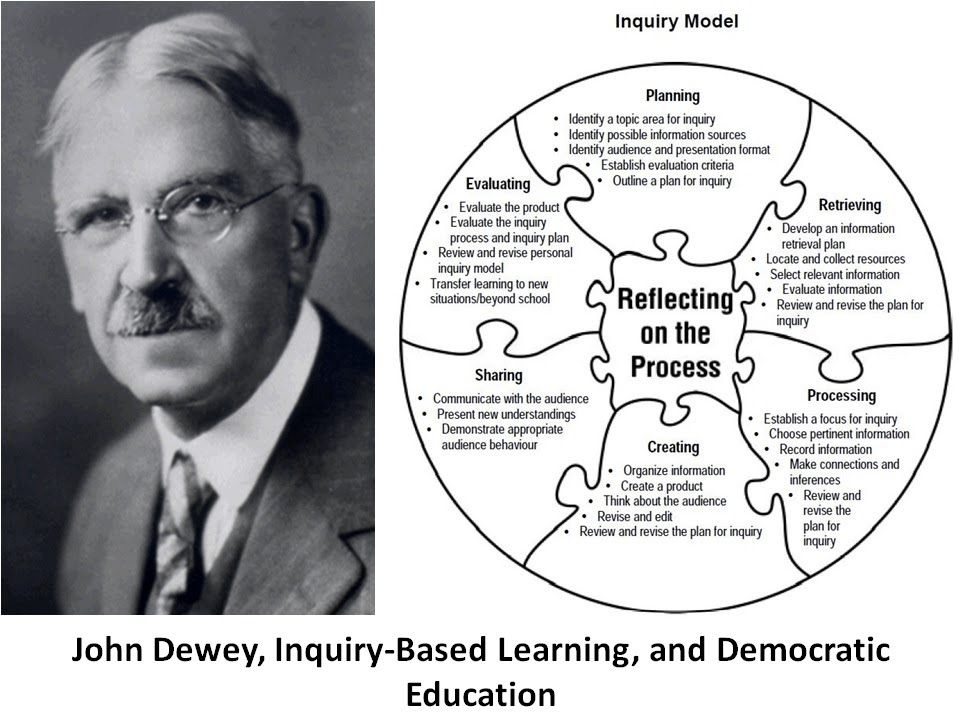
Below is John Dewey’s model of learning.
Below are my notes from the workshop detailed below.
Workshop An Analytic of Making 26/3/22
Writing about what we do and how we do it can sometimes be so difficult. I sometimes feel that I don’t explain my processes and what I learn enough. The work was based on a paper written by Bryan Eccleshall, and it featured four of Antoine Berman’s 12 Deforming Tendencies.
Prior to considering the four elements we considered Processes and Brian outlined issues in creating by looking at the Before, During and After.
The Before included Plans, Intentions, Reasons, Influences such as artists, Rationale and hopes.
The During included the doing such as painting/sculpture, Brushwork, the studio, Surprises, Accident, Difficulties, Feelings, Conscious decisions about elements like brushes, materials and colour palette. Intuitive decisions, In the moment.
The After included, What happened, Success/failure, learning, fulfillment.
We then began to consider the four Deforming Tendencies.
The four we concentrated on were:
Rationalisation
Making something too obvious Bryan gave an example of a written statement as a work of art and the statement said it all. Getting rid of the bush undergrowth.
Clarification
Inverse-Does shrinking help or hinder. What happens to detail Overloading the work/adding ‘meaning’ or unnecessarily reinforcing the work.
Expansion
Does making bigger diffuse it. What size and why.
Ennoblement
Is the material appropriate. Does the speed of the piece matter. Inverse: Might a series not a unique object be appropriate.
Evaluation
I enjoyed considering these elements and will now try to write about my work more analytically and effectively.
EditWorkshop An Analytic of Making 26/3/22
Drawing 2 Interpreting the environment, Start a Blog at WordPress.com.
Evaluation and analysis of the different models
Having considered the above learning cycles and approaches I believe that each approach has it’s merits and provide a reasonable sound guide. However some suggestions on reflection are dependent on the intentions and situations in regard to learning. For example Gibb’s model includes more about the senses such as sight, smell and taste. He also includes more about emotions and feelings. Experiencing some of these sensations may be quite relevant in some artists work but not in others. The Kolb’s model also refers a lot to experiencing things and learning from these experiences. Reflection is a bit like a pick and mix and it is important as an artist to choose an appropriate means of reflection that suits you best and one that works effectively for the work you undertake. If I had to choose just one I guess I would probably go for the Gibbs model as its more people focussed. The analytic of making however helped us focus on the making and the process of creating our work. I like the additional four tendencies and their relevance to creativity. What is interesting is that the more work I undertake on planning and considering my body of work it’s expanding and is likely to be somewhat experiential. My approach to learning as in my previous role as a social worker was around the famous proverb attributed to Confucius although it is questionable if it was his. However the proverb is…Tell me I’ll forget, Show me I’ll remember, Involve me and I’ll understand.
2 Describing your reflective practice
The model I’ve created is below. It may seem a little strange to have two lots of headings but Antecedent, Behaviour and Consequence was a model I was familiar with when looking after children who were deemed to have challenging or difficult behaviours. We would monitor and analyse behaviour using the ABC charts. I feel quite good and determined to write more detailed accounts of my work and to be more critically reflective.

Exercise 1.3 Writing a reflective commentary
When I consider key moments in the development of my recent practice I guess there have been several pivotal moments. As I started to use charcoal I was also researching Kentridge and how he felt when he picked up a stick of charcoal was exactly the same way I felt. He refers to endless possibilities when using charcoal and that for me is so true too. The charcoal is so malleable and easy to use. The strengths I was developing in its use were better broken line and spontaneous marks in figures. They had more energy and they didn’t look stiff any more. Using the erasure techniques rubbing in and out and redrawing was allowing me to not only to remedy mistakes with ease and to move on quickly, but it was enhancing some of the drawings of landscapes with light and contrasting dark marks.
Visiting Kentridge’s exhibition at the RA was another significant moment. It was a euphoric experience and I really savoured the day. I soaked up not just the exhibition which was quite harrowing and emotional in regard to being moved by the subject matter, but also for me quite an emotional experience in actually being in the RA. I spoke to several people in the restaurant and had a large glass of red wine. I just couldn’t believe I was there and treading in the footsteps of such great artists! On my journey I completed a few drawings known as a derive. One of these was of Christen Scott-Thomas the actress who I managed to meet on the subway platform. The derive drawings were done very quickly in the RA, a cafe and on the coach. I had a great day and the drawings were quite good too! As things had been really good and my drawing was improving I had decided on an exhibition. I had to apply for the space quite early and got a slot for 5th June for a week. The focus would still be the Transition Town’s foraging map as my body of work.
As I prepared for the exhibition which was as already stated in ex 1 some older work was revised and there was also some new works in charcoal. It’s great that the texts we’ve seen in our materials considers the fact that bad work isn’t bad and that its experimental or it can usually be revised. I find I often do this revision and very little work is wasted. For the exhibition I was also returning to some painting and I believe my paintings were richer through better drawing. I wasn’t going to use the exhibition as part of my course but for me it was important to put myself on the line and test the temperature of the water with the public. I used my art to make money for charity. I made £700 and paid £200 to the Transition Town and £500 to the League of Friends Hospital. I utilised some good contacts to help me. People to help transport the work and to be around when I was occupied with workshops. I held six workshops. The workshops were held on three days and I ran six altogether three in an afternoon and three in the mornings. A couple of friends suggested a raffle which I think I reluctantly agreed to. My fear was that this detracted from the exhibition of work. The raffle however did help us make more money and at times help engage people which provided a dialogue also about the work.
The exhibition was however was a huge success. I sold eight works and was commissioned to complete five others. I had lots of very positive comments about my work and I did have a comments book in place. On reflection I would have done only one workshop per day as this was quite tiring.
The other crucial issue was my tutor. Seeing such positive comments about my work was incredible and I sometimes had to retrace and reflect on the drawings she commented about. Such positive comments gave me further self belief. I do feel now that I can draw with more competence. Figurative work, facial expressions, capturing mood and atmosphere, managing to draw gruesome images and ultimately creating images that will make their mark in peoples thinking and perceptions. Art similarly described by Tina Campt in her book the Black Gaze. She wrote about several artists work who she believed changed how we see things. I can explore her book further and use this as part of my rationale. What I am clear about is that each drawing is an experiment. As I draw more and more and revise, rub out and redo I will eventually have work that will be of a satisfactory exhibition standard. The issues will be how big they might be and on what surface.
As I reflect on my future plans I am conscious that my ideas are centred around texts YOY and the Holt text and the more I focus on the project and encounter different people my ideas expand. I’m wanting to explore auditory and experiential/performance and incorporate this language alongside the visual drawing narratives.
I’m conscious that in order to concentrate on better drawing I shall research other artists who work in charcoal or who have depicted injury or death. I’ve begun to look at Kollwitz and Rego in addition to Kentridge and Walker. I’ve learned such a lot but this final project can be quite diverse. As I learn more I want to explore Abramovitz as her performances are about psychology. There may be relevance in regard to some of the experiential exercises I want to undertake. My previous experiences as a social worker will help me to develop these. These will focus on adult v child power imbalance. I also want to explore auditory sensory experiences. On POP 2 we visited an artist who had done some auditory brainwashing that had disorientated them. I need to look back further at this work as I have ideas about an auditory loud set of language. Shouting, arguing, bad language doors banging, hearing physical slaps etc. This would take place in a dark room.
I’m also planning on a performance driven experience that will involve others in a simple playing out of a scenario. Events unfold as each person is bought into the equation and take on their part. I will write a suitable and unidentifiable scenario after reading some of the enquiries. It would last about 30mins and for participants and audience there would be debriefing and exploring feelings after the event. I have ideas about who to include that range from a local school to other artists or the local theatre group. This would form part of the exhibition as they walk through each room. The last room leading to remembrance garden and more joyful Holt text. They will leave with a copy of this. The scenario would need to be video’d. I could then use it in the exhibition as a visual if the people in the scenario could only attend once. It could be a daily experience v a one time showing. I need to work through and determine venue etc.
I have learned such a lot and my work continues to improve. Ideas and themes do come into my head and I jot down. I’m never short of ideas but I need to research them and make sure they can be achieved and that they work in an integrated and fluid manner. Overall and on reflection so far I do feel I have the ingredients for an integrated, interactive and visually diverse coherent body of work. The narrative will interrelate to one another well to heighten the impact on the viewer and raise awareness of the issues.
Undertaking this exercise has helped formulate one or two of my ideas. I just hope I’m not being too repetitive as we seem to have already looked back when we were surveying the field.
My main issues are around the chicken and egg situation. I need a suitable place/venue with four rooms. In the ideal world I’d like to go big, Birmingham, Bristol maybe. If I use local facilities I need to explore these soon. Going big on such an important issue would be great but funding could be an issue. I need to explore this soon too.
Exercise 1.4 Writing a letter to yourself
I’ve written my letter with my best fountain pen. Here’s hoping that all goes well!
 Endless Possibilities