Before going to the Trinity Wharf Exhibition I had booked to go to this exhibition at the Royal Academy. As I plan an element of performance in my exhibition I wanted to explore the work of Abramovic as some of her work involves audience participation and psychological effects as she explores endurance. I wanted to consider issues around my audience and any impact for them. It is important that I look after my audience if I’m exposing them to material that may trigger any adverse past events or experiences.
There was a warning notice before entry about nudity and that in this regard no photos could be taken of those naked, however there was no warning about the nature or content of the work. The artist herself wasn’t physically present but there were several videos of her in various activities. As I walked through each room I was quite disappointed by what I was seeing. As I began to walk through, in one area there were several videos being played. One was of the artist and her husband and we see them alternately giving each other a hefty slap around the face. This was carrying on for quite a while. I couldn’t help but question the activity in terms of it’s purpose. While I was mindful of the artist promoting endurance I couldn’t help feel that this was very disrespectful and distasteful to anyone who had experienced domestic violence. I watched and observed some of the people watching. I couldn’t help feel that if someone said its okay not to like or view this video favourably they might have agreed with this view, but I also believed that some viewers wouldn’t do this as this must be good art if its at the Royal Academy.
The next distasteful item was of a real naked woman lying down on an elevated platform. On top of her was a skeleton. Underneath the platform was a video of Abramovic lying in the same pose as the woman above and she also had a skeleton on top of her. While the real woman was quite still and just breathing shallowly, in contrast Abramovic was adding more movement in the video of her. She was breathing heavily and her body was quite gestural in regard to the movements with the skeleton. It seemed to me to be bordering on necrophilia. Surely this wasn’t about endurance as it definitely had sexual undertones. I researched further for more of an explanation as apart from one photo in the catalogue there was no real reference to this work. The cost of the hard cover catalogue produced by the RA was £30. I managed to find more information by googling Abramovic and nude skeleton and I found a link on the moma website. https://www.moma.org/audio/playlist/243/3132 Accessed 13/10/23
Here there was some explanation of this work being linked to Tibetan Buddhism. Glenn Lowry is the Director of the Museum of Modern Art and I include his dialogue with Abramovic below.
GLENN LOWRY: One of the influences on Abramović’s work is Tibetan Buddhism. In Nude with Skeleton, Abramović evokes a traditional exercise undertaken by Tibetan monks during which they sleep alongside the dead in various states of decay. Through this practice they gain an understanding of the process of death.
MARINA ABRAMOVIĆ: In different periods of my life I made several works using skeleton. Her narrative is below.
I construct the skeleton on my own size, and I lie posing the skeleton on my own body. By breathing slowly, skeleton get animated and moves together with me.
The work is really about facing your own mortality. Is about fear of pain and fear of dying. It’s something that in our life we fear the most.
And, again in my own work, I always like to confront with the fears. So, being close to the skeleton, washing it, carrying it, breathing through, and looking at, confronting it, it’s the way to deal with that fear.
GLENN LOWRY: Nude with Skeleton is re-performed continuously in shifts throughout this exhibition for a total of over 700 hours
© 2023 The Museum of Modern Art
Despite there being some explanation of the origins of the exercise I personally feel that the artist seems to latch onto any extreme issues concerning the body and then she exploits these often sacred rituals, exposing them to an unwitting public and in this regard exploiting her audience. I would argue that most people’s fear of death is not about the skeleton but about the way one might die and fear of the unknown after death.
The best work in my opinion was some of her drawings and I took several photos of the exhibition as below.

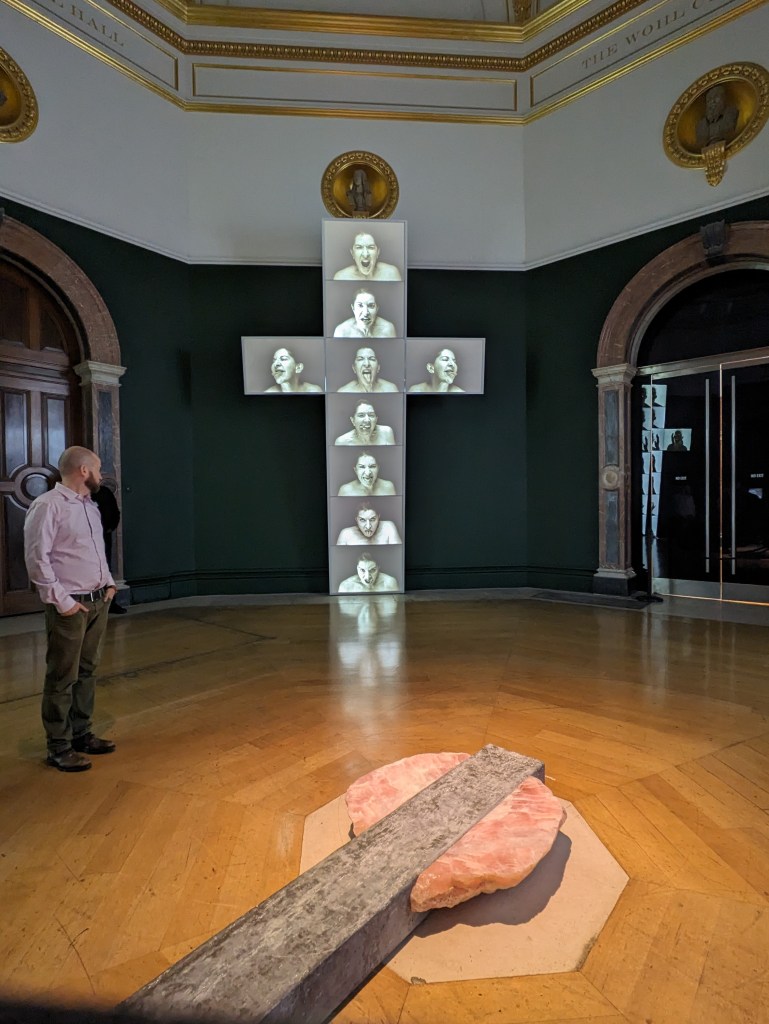
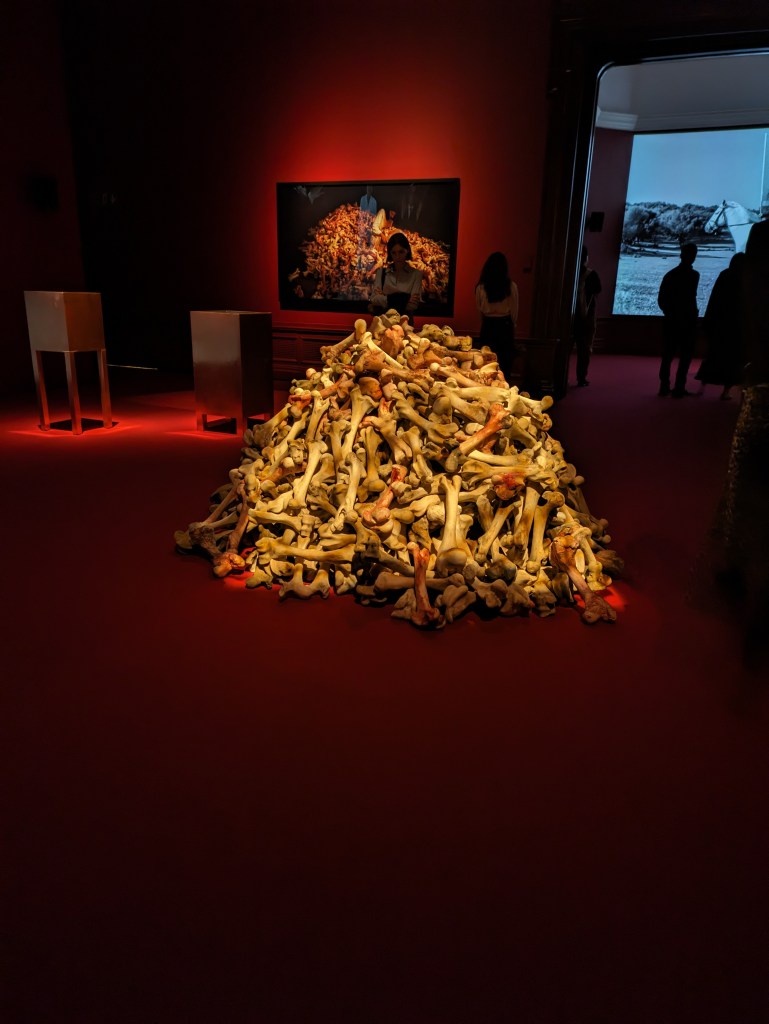
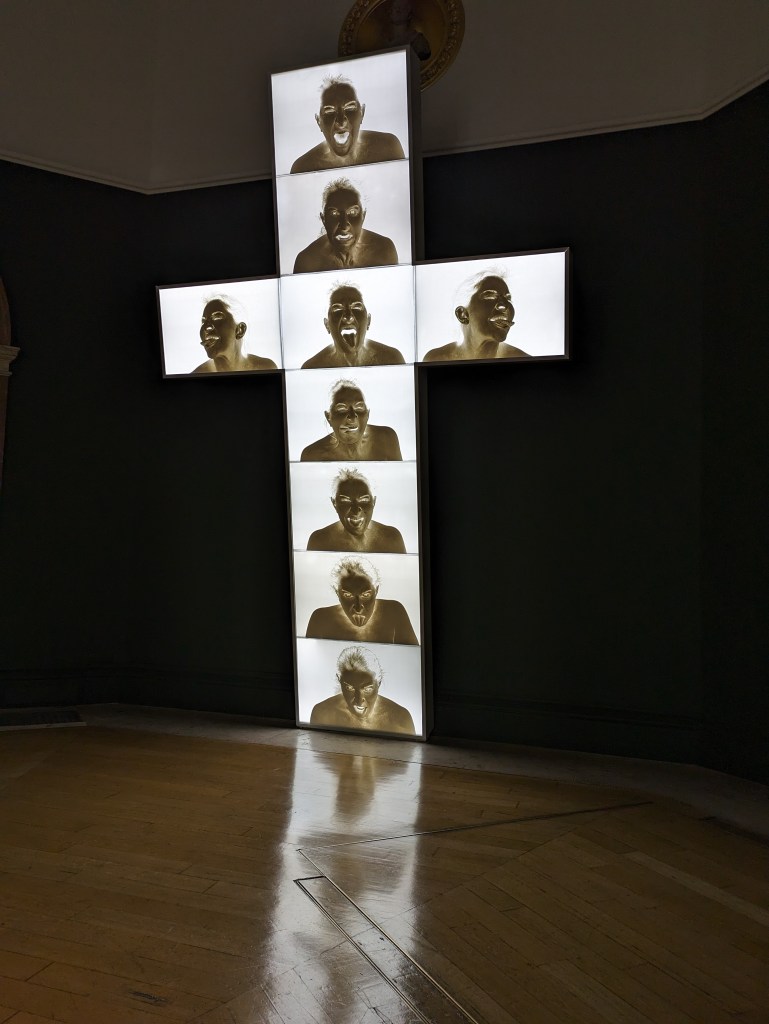
I do appreciate her difficult background but in some ways I think she acts out her own past difficulties on some vulnerable people in her audience. I would like to add that I can usually appreciate most artists work.
 Endless Possibilities