I find this exercise quite difficult in regard to how I believe chance can be interpreted in regard to my current work. I often have what a previous art tutor used to refer to as happy accidents. This occurred when the paint would be applied onto paper and the colours bled into one another. It might be splashed or almost ladled onto the paper. If what transpired was successful and worked well it was described as the happy accident. I now believe and I am confident that my drawing process and application includes chance as part of my process. I draw quite rigorously and at times I’m unsure where my hand will fall. The marks I sometimes make even with drawing figures, sometimes pleasantly surprise me. The first example I shall give is below. I was desperate to improve the facial features of the boy in the picture and I made a combination of spontaneous rigorous erasure marks on his forehead and face. As I stopped and looked at what I’d done the marks seemed to compliment the drawing. I had expected to redraw in more charcoal but I left some of the strands of light as they were. I can’t fully explain what is happening to me in regard to drawing but as I’m learning more and more there is no bad drawing. Kentridge referred to this remark and it’s been my mantra. It’s helped me to really move forward and draw better.
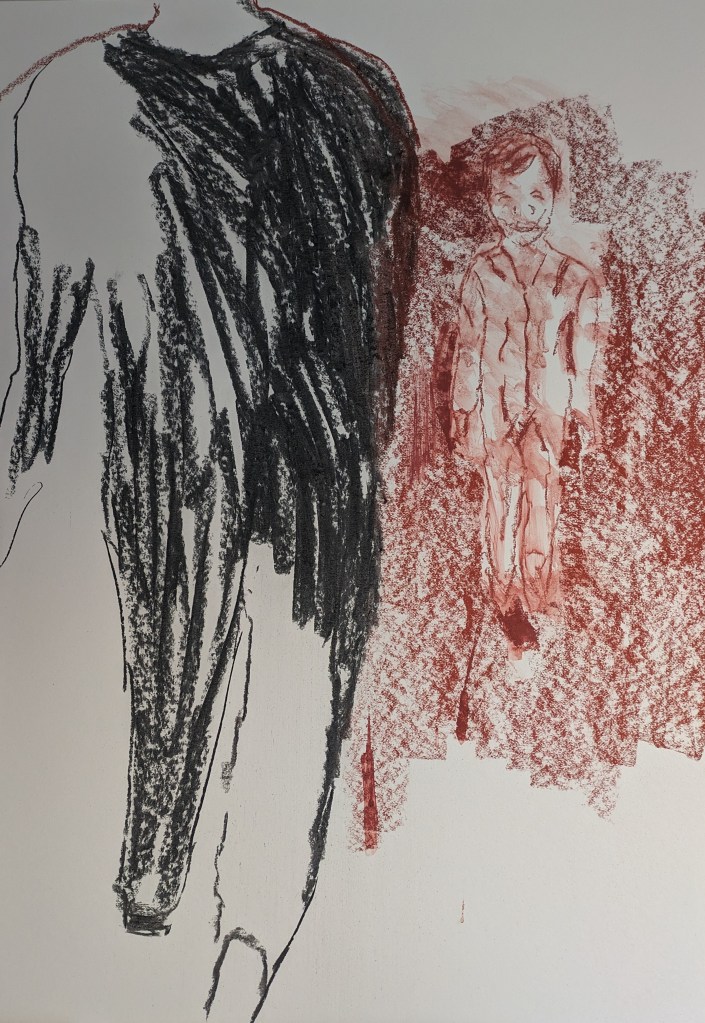
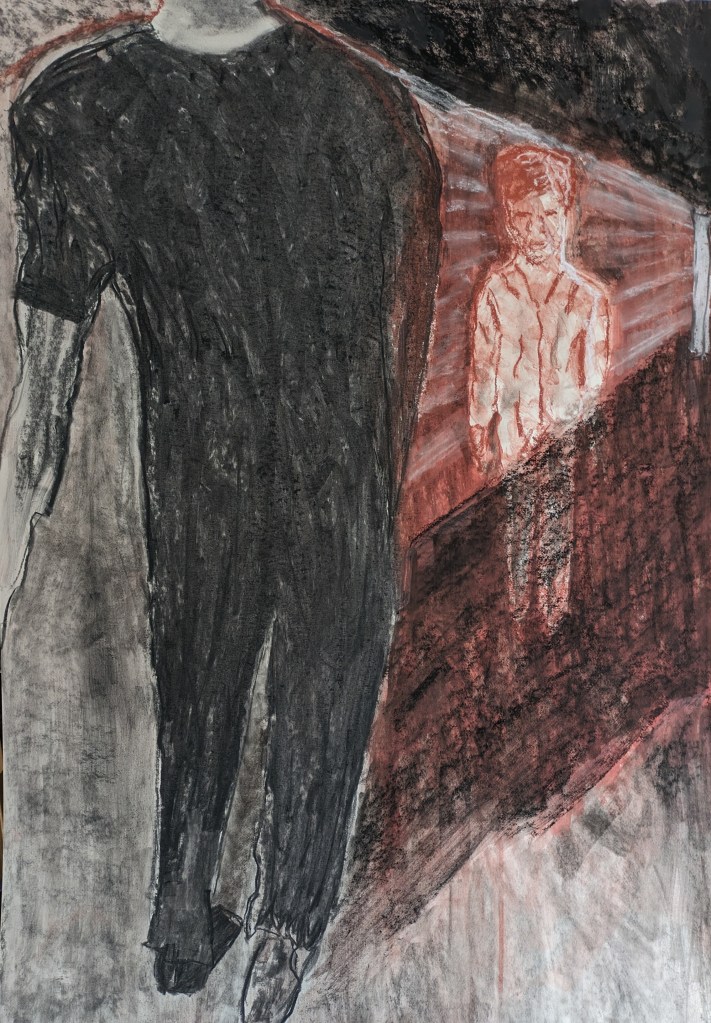
The next drawing was done with this exercise in mind. What I was trying to draw was a small child and a larger than life adult. I’m thinking of demonstrating the vulnerability of the child and the power imbalance between adult and child. I think initially because I wasn’t that keen on the exercise my heart wasn’t in the drawing. I wanted to use the technique I’ve started to employ with an outline of the figure and then blurring the lines with a wet brush. I had the idea of using two colours. The boy in indian red and the figure darker in black charcoal. I keep pushing and testing things out. My initial drawing is below in stages. I’m drawing on an A1 size white mountboard.
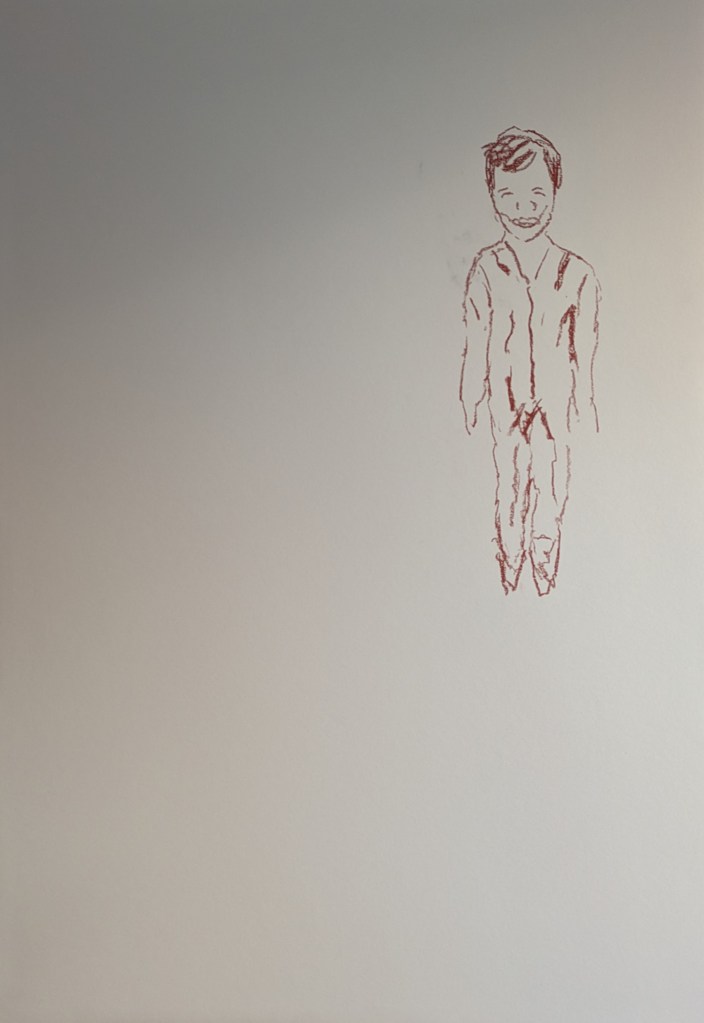
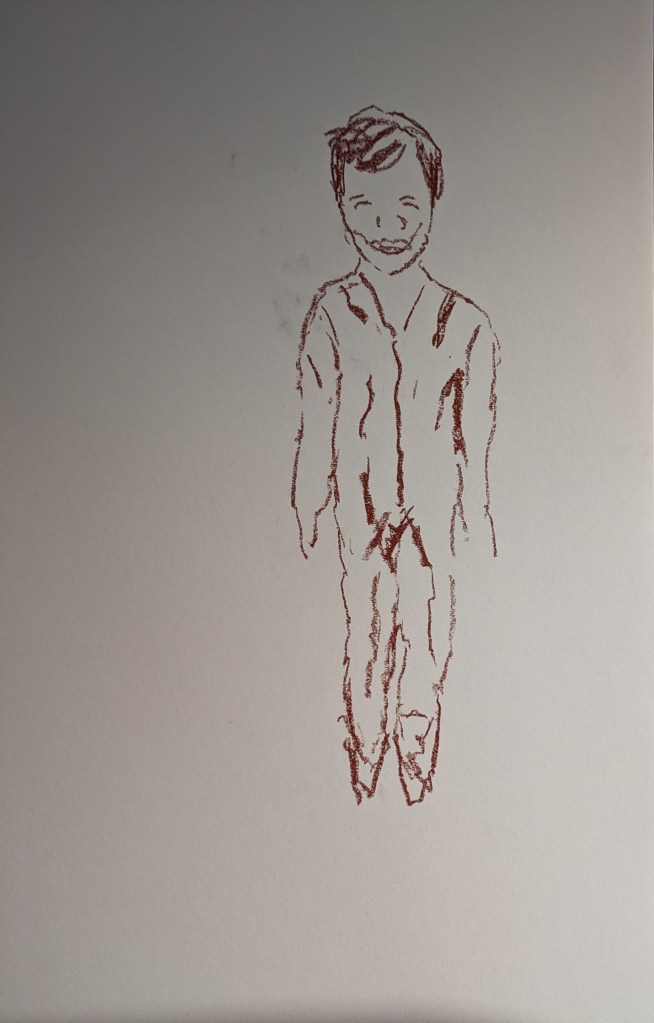
The next stage includes the adult figure and blocking in lots of colour. At this stage I’m really unhappy with the drawing and nearly give up on it. It feels like the drawing is for the previous exercise rather than being about chance
I decide to persevere and add in some light. The large figure is casting shadows across the boy but almost like being in competition the light is coming through from a window. The work is about the boy’s fear as the adult approaches. There’s no eye contact. The boy is looking down.
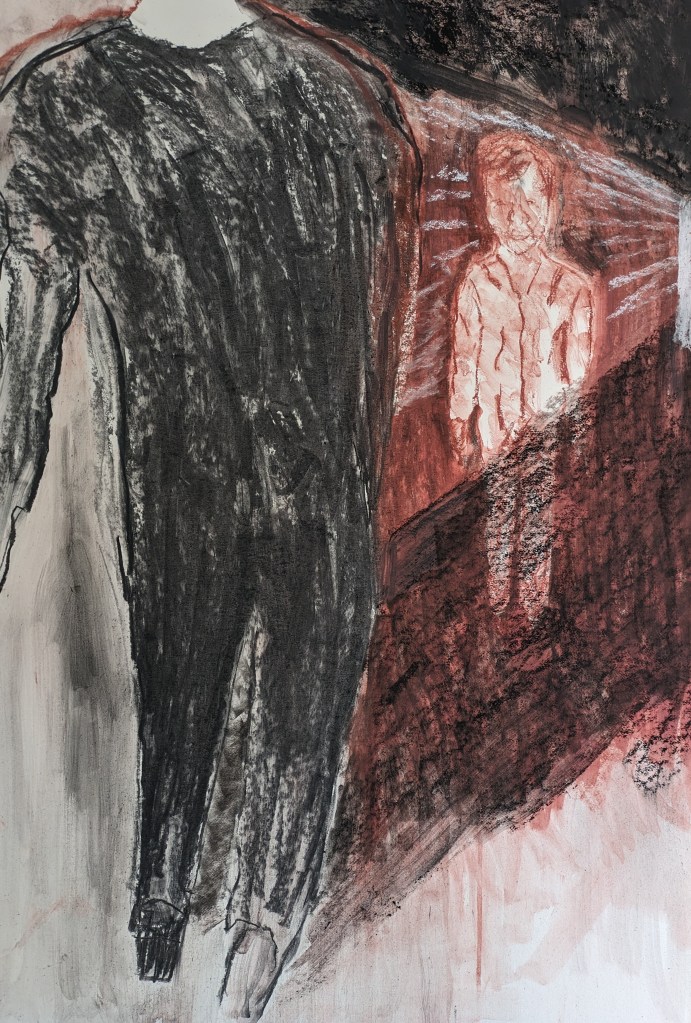
This drawing shows more darker colour and smudging of the white chalk. I also give the left foot more definition on the large figure as if striding forward. I also add some light to the boys face on the right and a little on the body. He does look forlorn and unhappy. He’s definitely looking down. I might replicate this drawing on a large canvas. I do think it works in many ways in regard to the narrative and intent. The red on the left shoulder needs to disappear but I’ll leave it here for now. It is all about the cast shadows and the competing light. I must not forget Plato and add him into my mind map.
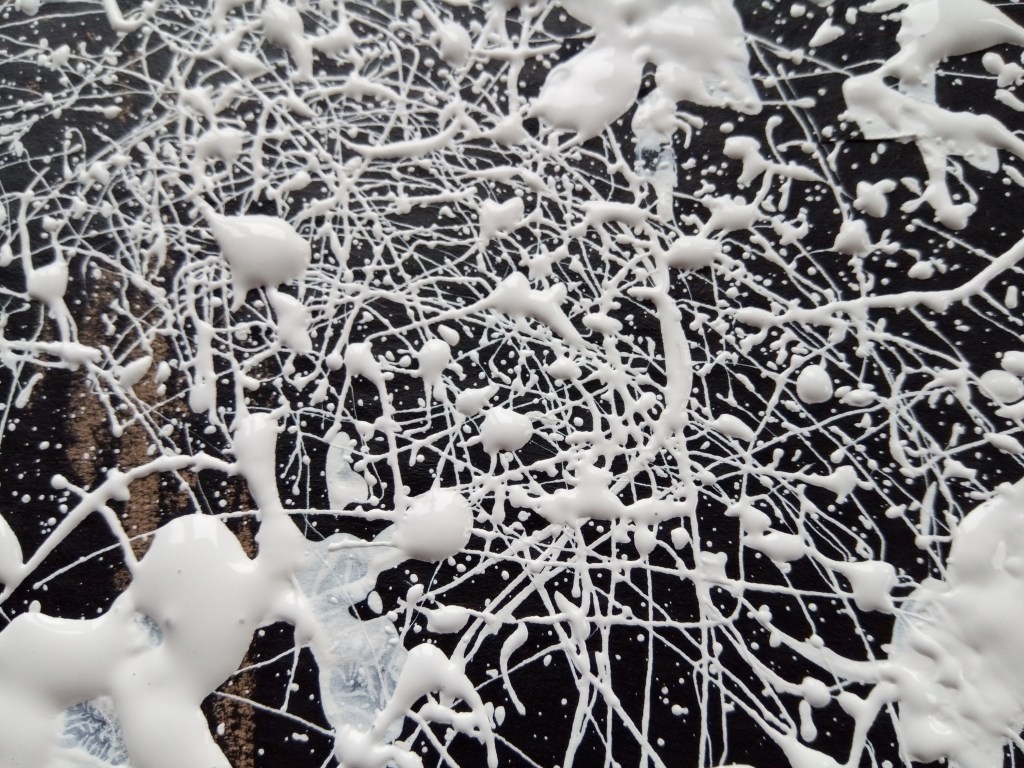
Staging chance and this process I have used before. For example in POP2 I used a mechanical hand whisk dipped in pain and I was unsure how this would go. I drenched the whisk in white emulsion paint and then turned the whisk vigorously onto my surface. I include this photo of the work which was on a black gesso piece of cardboard size approx 20 x30ins. I hadn’t any idea how it would turn out but was really pleased and exhilarated by the process and the end results…..such intricate marks.
I believe chance is very important and it has a place in everyone’s artistic work. However the creation of chance is for me, dependent on the type of work I’m trying to create.
 Endless Possibilities