Research point
Look up the interview between sculptor Rachel Whiteread and Bice Curiger
entitled The Process of Drawing is like Writing a Diary: It’s a Nice Way of Thinking About Time Passing and reflect on the references Whiteread makes to drawing.
https://www.tate.org.uk/context-comment/articles/process-drawing-writing-diary -its-nice-way-thinking-about-time-passing
I managed to find this on the gallery website despite the link not working. I must admit to being a fan of some of her work. I really appreciated what she did with house and the Holocaust memorial. As the interview progressed I could identify with how she felt when there was a lot of controversy about her work and how this took it’s emotional toll on her. It is sad that she said she wouldn’t have done these projects if she had known what difficulties she would encounter. In the past I’ve often been quite outspoken and principled when standing up for clients and their rights. In this regard I have sometimes come under some crossfire. I still feel we should all strive for the good and over time I appreciate and admire some of the activist artists and how they put their art to good use.
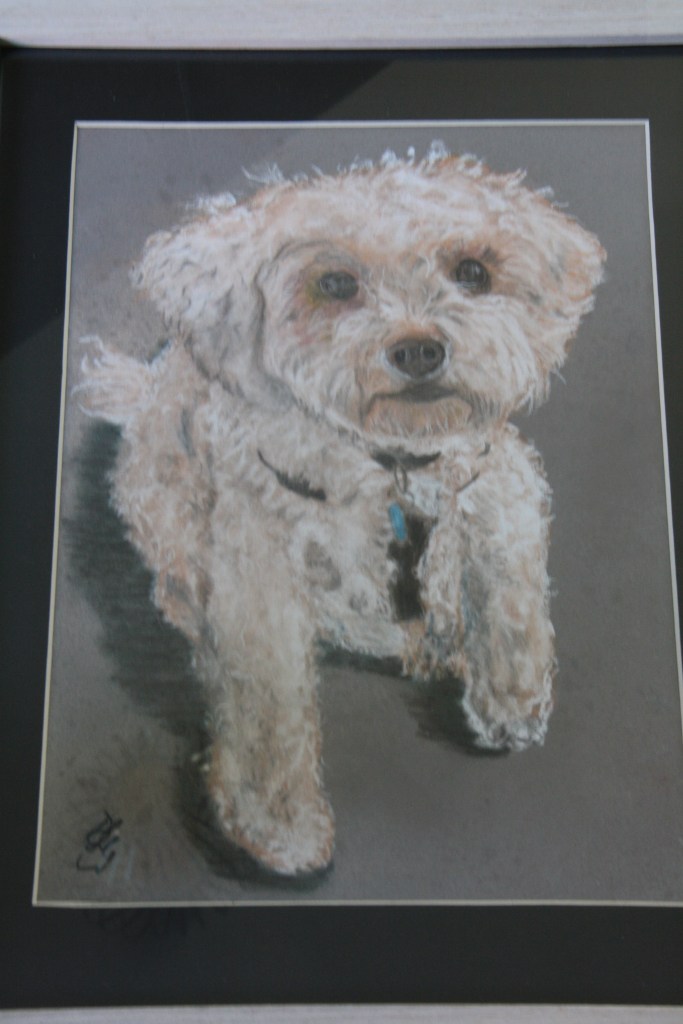
I could further identify with what the artist was saying about drawing, it being like a diary and a nice way to pass time. In between the difficult drawings it is important to do some pleasurable ones. I’ve never done a portrait in pastel before so I did this dog below. I did it on pastel-mat board. It took me about a couple of hours to complete. The board is 25x35cm. There might be hope for me yet with pet portraits! I think I’ve made her a little plump but there is a likeness. She’s a dog with character!

Collecting things is part of my process and as previously indicated I am a hoarder and everything usually will have a purpose at some point.
As I looked further at some of the suggested work by artists who document history, folklore and events it reminded me of how I have documented through photography lots of places I’ve been and various events. I’ve always taken photos with a view to painting some of them. In this regard I will never run out of subjects. I liked the Deller website and accessed this on 28/10/23.
http://www.jeremydeller.org/FolkArchive/FolkArchive.php
I further considered the work of Claus Oldenburg and accessed a little information specifically about the Manhattan mouse museum exhibition that was on the MOMA website.
https://www.moma.org/calendar/exhibitions/1296? Accessed 26/10/23
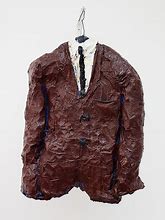
Sadly there were not any images of his work to download but I was already familiar with his work. He was of the POP Art era and created quite humorous sculptures of every day objects often making them larger than life. I managed to search on bing some images. The jacket is called an emerging artist https://www.bing.com/images/search?q=Oldenburg+Soft+Sculpture&form=RESTAB&first=1
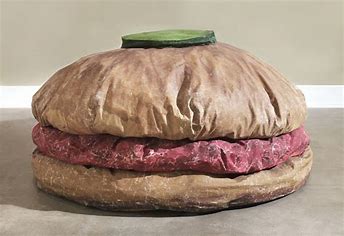
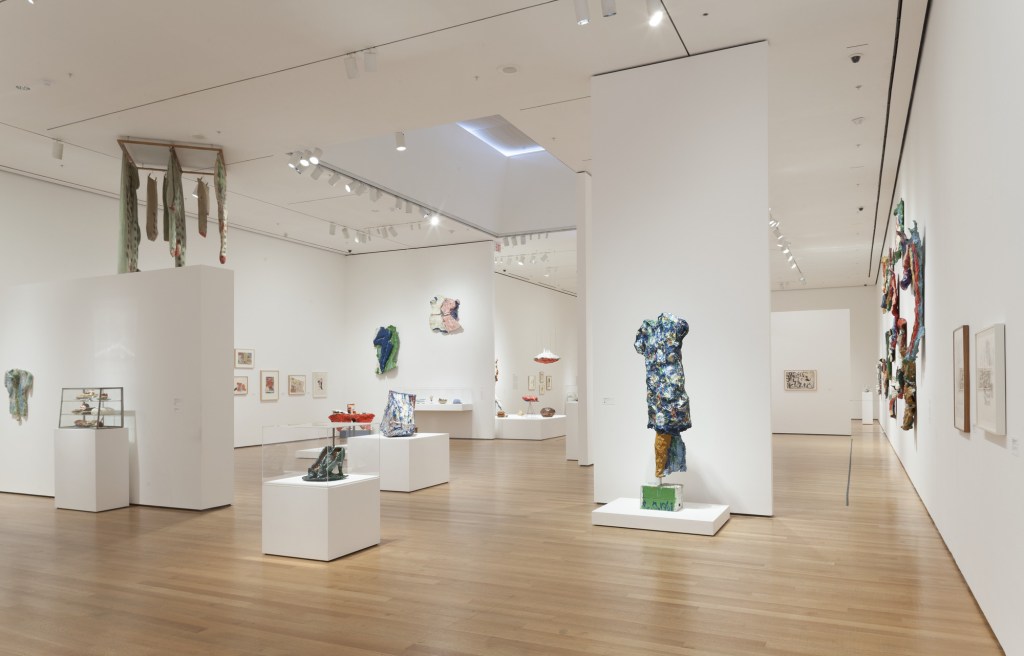
I’ve included his burger that was quite famous too. The third photo is from the exhibition at Moma, an installation view of his work.
The third artist I’ve chosen is Karsten Bott. I managed to google again some information. The artist has collected various objects over a thirty year period and has stored, documented them and archived them. A snapshot of the place and the objects is below. The first image is from Botts website.http://www.karstenbott.de/ Accessed 26/10/2
The images below were from another website
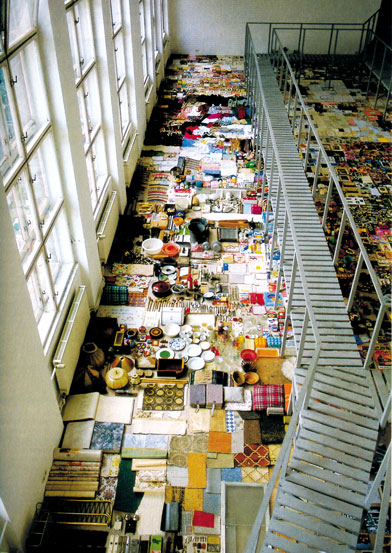
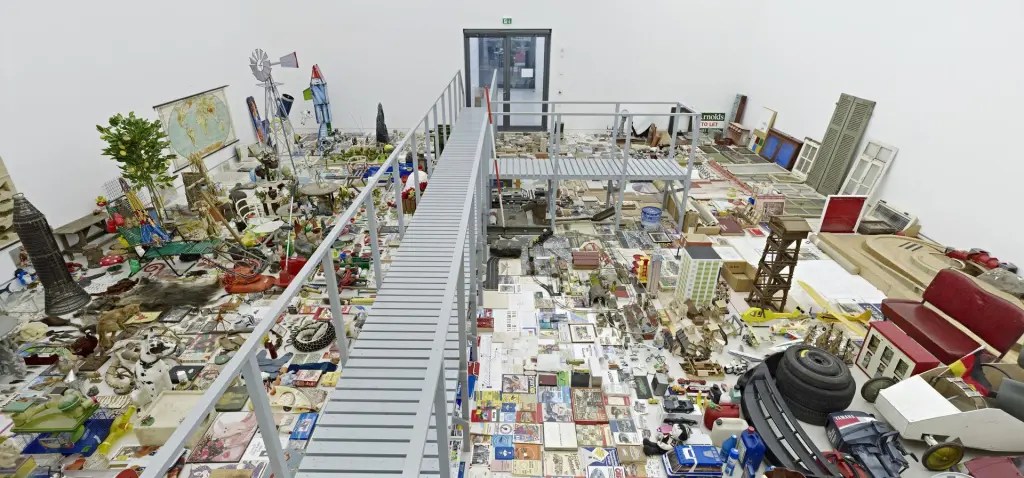
The vast array of different things is incredible. As I looked on the website the artist has had numerous exhibitions with a lot of the items in various category’s.
While I can appreciate the huge scale of the work and how important some objects are. for myself and how things relate to my work I prefer to stick to small scale. I do tend to archive and document mainly where things are and some details about them. I am a collector of certain things. For example I collect fountain pens old and modern. I just love their history and their progression in manufacturing. I also have a few propelling pencils too and a couple of writing desks and inkwells. I love rummaging for pens at antique or vintage fairs. I do appreciate preserving objects in history.
I do tend to archive my work. Most of it is paintings or drawings and I tend to try to store these in the garage. Some canvases are on the walls in my studio often with the intention of selling the work or improving on it. I usually try to store in boxes to protect the work or I also use for watercolours or works on card or paper large folders with plastic sleeves inside. Due to my untidiness, I often revisit boxes and folder and I do fine I have other ideas about a work as I reflect on it. It is at this juncture that I might pull it out and rework. Nothing is ever really wasted. I find it really useful to reflect and revisit past work as it’s also a way of monitoring progress and how my work is improving.
Reading Point.
https://www.tate.org.uk/research/tate-papers/09/perspectives-negotiating-the-archive
What I really believed was of value as I read the article by Sue Breakwell was the statement below from Kabakov’s book or article below.
However, our feelings towards archives are ambiguous. In Ilya Kabakov’s The Man Who Never Threw Anything Away 1996, the main character has a room filled with a lifetime’s garbage, bearing witness to ultimately pointless efforts to classify and record all the links between the items:
A simple feeling speaks about the value, the importance of everything … this is the memory associated with all the events connected to each of these papers. To deprive ourselves of these paper symbols and testimonies is to deprive ourselves somewhat of our memories. In our memory everything becomes equally valuable and significant. All points of our recollections are tied to one another. They form chains and connections in our memory which ultimately comprise the story of life.2
The author makes the very important connection about memories and how everything links together. It fells like the documentation of the narrative of our life’s journey. I feel this is very poignant.
Sue Breakell, ‘Perspectives: Negotiating the Archive’, in Tate Papers no.9, https://www.tate.org.uk/research/tate-papers/09/perspectives-negotiating-the-archive, accessed 11 November 2023.
Tate Papers (ISSN 1753-9854) is a peer-reviewed research journal that publishes articles on British and modern international art, and on museum practice today.
 Endless Possibilities